
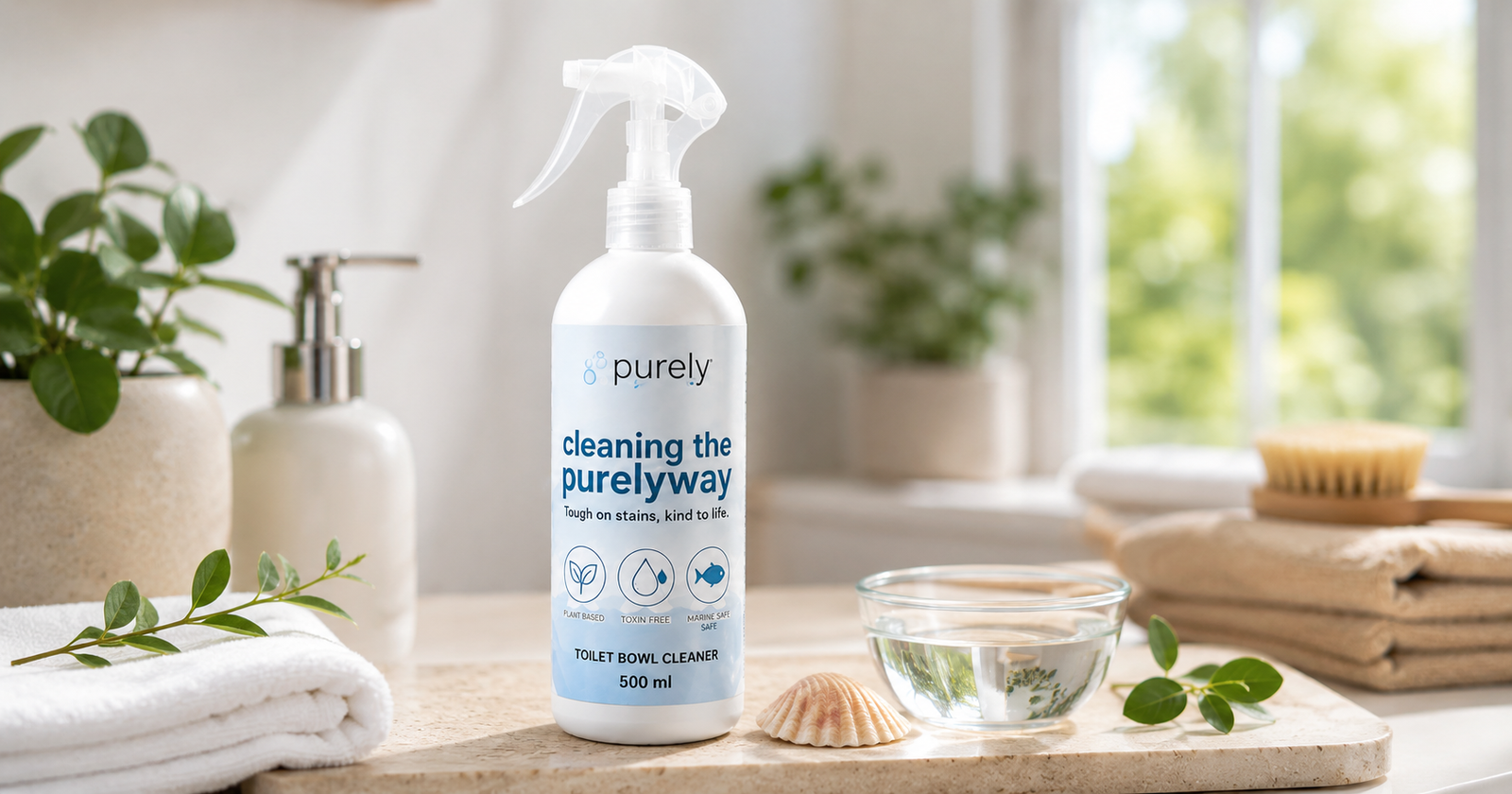
Pick up any bathroom cleaner in your house right now and read the back label. Chances are it says “natural” somewhere. It probably doesn’t say what that actually means.
That gap — between what a label promises and what’s really in the bottle — has become one of the biggest frustrations for anyone trying to clean their home responsibly. You want an eco-friendly bathroom cleaner. So does almost everyone else right now. But greenwashing has gotten so common that a huge share of environmental claims on packaging turn out to be exaggerated or flat-out misleading once you dig into them.
That’s not a small problem. It’s the reason shoppers have gotten skeptical of green packaging altogether, even when a product genuinely deserves the label.
Why “Natural” on the Bottle Doesn’t Mean Much
Here’s the thing about the word “natural” — it isn’t regulated. A brand can slap it on a bottle that’s 90% synthetic surfactants and still technically not be lying, because there’s no legal definition stopping them.
Real toxin-free cleaning products work differently. They list every ingredient. Plant-based surfactants instead of petrochemical ones. No ammonia, no chlorine bleach, no synthetic fragrance hiding behind the word “fragrance.” If a brand won’t show you the full ingredient list, that’s worth noticing.
A mother in Andheri shopping for a toilet cleaner that won’t irritate her toddler’s skin doesn’t have time to research every chemical name on a label. She needs the brand to have already done that work — and to prove it, not just claim it.
What Actually Happens After You Rinse
This is the part most bathroom cleaning conversations skip entirely. Where does the water go after you scrub the tile and rinse the bucket?
Straight down the drain, into the municipal water system, and eventually — for most Indian cities — into a river, lake, or the ocean. Conventional cleaners loaded with phosphates and synthetic chemicals don’t just disappear once they leave your bathroom. They travel.
Marine-safe formulations matter precisely because of that journey. A cleaner that’s genuinely biodegradable breaks down before it can disrupt aquatic ecosystems downstream. One that isn’t keeps doing damage long after your bathroom looks spotless. That’s the entire logic behind a drain-to-ocean mindset — the bottle in your hand today becomes someone else’s water problem tomorrow.
Should that change how you shop? It probably should, and more people are realizing it.
Spotting a Genuinely Eco-Friendly Bathroom Cleaner
A few things separate the real deal from the marketing dressing:
- Full ingredient transparency — not “proprietary blend”
- Plant-based or enzyme-based active ingredients, not synthetic surfactants
- No ammonia, chlorine bleach, or phosphates
- Biodegradable formulas with actual third-party certification, not a self-printed leaf icon
- Performance that doesn’t ask you to compromise on actually getting your bathroom clean
That last point trips people up. There’s a stubborn myth that toxin-free cleaning products are weaker. They’re not, not anymore. Plant-derived surfactants and enzyme formulations have closed that performance gap almost entirely. You shouldn’t have to choose between a clean toilet and a clean conscience.
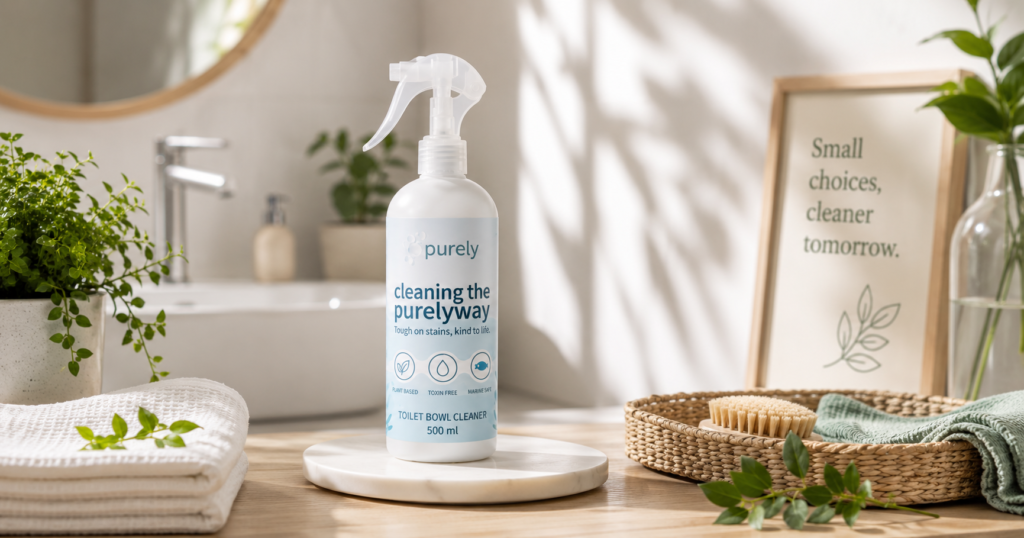
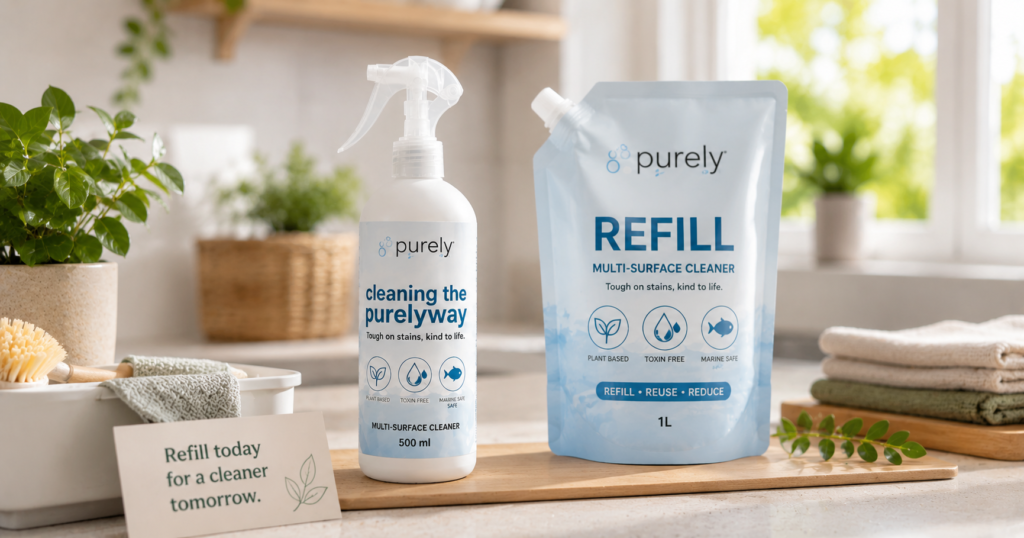
Purely was built around that exact standard. Every formula is plant-based, toxin-free, and tested for marine safety — meaning what goes down your drain doesn’t become a problem for the next ecosystem it touches. No vague “eco” badge stuck on for marketing. Just ingredients you can actually read and understand, and a formula that holds up against real bathroom grime.
Small Swap, Bigger Pattern
You don’t need to overhaul your entire cleaning cabinet in one weekend. Swap one product at a time as you run out — start with whatever you use most, probably the toilet cleaner or the all-purpose spray.
That’s a manageable way in. It also adds up faster than people expect once a few swaps are in place.
Health-conscious households with kids, older parents, or pets at home tend to feel the difference first, simply because they’re more exposed to whatever’s lingering on bathroom surfaces after a quick scrub. But honestly, anyone breathing the air in that bathroom benefits from cutting out ammonia and synthetic fragrance.
The bigger pattern here isn’t really about bathrooms at all. It’s about being willing to ask what’s actually in the bottle instead of trusting the front label to tell you the truth.
Ready to make the switch to a cleaner that’s honest about what’s inside — and where it ends up? [Internal link: “explore Purely’s plant-based formulas” → Products page] Browse Purely’s range and see what a genuinely eco-friendly bathroom cleaner looks like, ingredient list and all.
One Response
Hi, this is a comment.
To get started with moderating, editing, and deleting comments, please visit the Comments screen in the dashboard.
Commenter avatars come from Gravatar.